


Zero to Monetized: The Ultimate AI Shorts Roadmap to the YouTube Partner Program
Article Summary: This comprehensive guide outlines the strategic path for AIGC creators to qualify for the YouTube Partner Program (YPP). It covers account security, niche selection, AI production workflows, and actionable tips to reach 10 million Shorts views rapidly, turning a creative hobby into a diversified income stream.
For AIGC (Artificial Intelligence Generated Content) creators, the journey from a brand-new channel to qualifying for the YouTube Partner Program (YPP) is a test of strategy, efficiency, and quality. It is no longer just about creativity; it is about operational excellence.
By leveraging high-performance AI tools and mastering platform dynamics, this roadmap can be significantly accelerated—allowing savvy creators to validate their workflow and hit monetization goals in as little as 1–2 months.
Here is your step-by-step guide to cracking the code.
I. Foundation & Compliance: Building for Scale
Success begins with a robust, compliant infrastructure.
1. Account Setup & Optimization
To become a creator, you need a Google Account (for viewing/liking) and a YouTube Channel (for uploading).
| Step | Key Action | Details & Best Practices |
|---|---|---|
| 1. Channel Creation | Log in to Google. Attempting to upload or comment will prompt you to create a personal channel, or select "Create a Brand Account" (recommended for team management). |
Pro Tip: Brand Accounts allow multiple users to manage the channel without sharing login credentials. |
| 2. Visual Branding | Set a memorable Channel Name, upload a distinct Profile Picture, and design a Banner that communicates your niche and upload schedule. |
Official Advice: Visual consistency builds trust. Ensure all assets adhere to YouTube Community Guidelines. |
| 3. Security Config | Two-Step Verification is mandatory for YPP applications. Link a recovery phone/email and save backup codes to handle any identity verification challenges. |
Critical: Do not skip this. Without 2FA, you cannot monetize. |
| 4. Regional Settings | Set your channel's location to a YPP-eligible country (e.g., US, UK, Canada). |
Note: Your location setting determines monetization eligibility, but the algorithm pushes content based on audience interest, not your setting. |
2. Platform Rules: The "Red Lines"
To build a long-term asset, you must navigate YouTube's strict policies.
- The Absolute Red Line: Child Safety.
Content endangering minors (including "Elsagate" style videos, inappropriate use of cartoon characters, or implied threats) is strictly prohibited. Violations here often lead to immediate termination with no recourse.- The Content Red Line: Repetitious Content.
YouTube demonetizes "programmatically generated" or highly repetitive content. Simple compilations, unedited movie clips, or scraping content from TikTok will disqualify you.
💡The Strategy: You must prove to the algorithm that your content is unique. Even if using AI, every video must offer distinct value, commentary, or narrative transformation.
3. Niche Selection Strategy
For new entrants, AI Shorts represent the most viable pathway to rapid growth.
- Define Your Vertical: Many successful creators start with AI-driven niches like "AI Storytelling," "Trivia/Facts," or "Visualized History." AI tools have democratized high-end production values for these categories.
- The "Blue Ocean" Approach: Targeting specific, under-served sub-niches (e.g., "Oddly Satisfying" 3D loops or specific fan-fiction lores) helps you stand out. Narrow niches often command loyal global audiences.
- Competitor Analysis: Build a "Swipe File" of model channels—those with high views and recent viral hits. Reverse-engineer their pacing, hooks, and script structures to minimize your trial-and-error phase.
II. Content Production & Growth Hacking
Content is your product; AI is your assembly line.
1. The Anatomy of a Viral Short
Short-form video is a velocity game. You must hook the viewer immediately.
- The 2-Second Rule: You have less than 2 seconds to stop the scroll. Use bold visuals, dynamic captions, or a provocative statement. The retention rate in the first 3 seconds often determines if a video hits 10k views or 1 million.
- Pixel-Level Iteration: Successful creators often start by closely modeling proven viral formats. Once the workflow is validated, they innovate by combining elements—for example, mixing popular folklore characters with modern "underdog" narratives.
- Keep it Snappy: Ask yourself: "If I cut 5 seconds, does the story still make sense?" If yes, cut it. The ideal AI Short is typically 15–60 seconds of zero-fluff entertainment.
2. The AI Efficiency Tech Stack
Modern AI tools shift production speed from "hours" to "minutes."
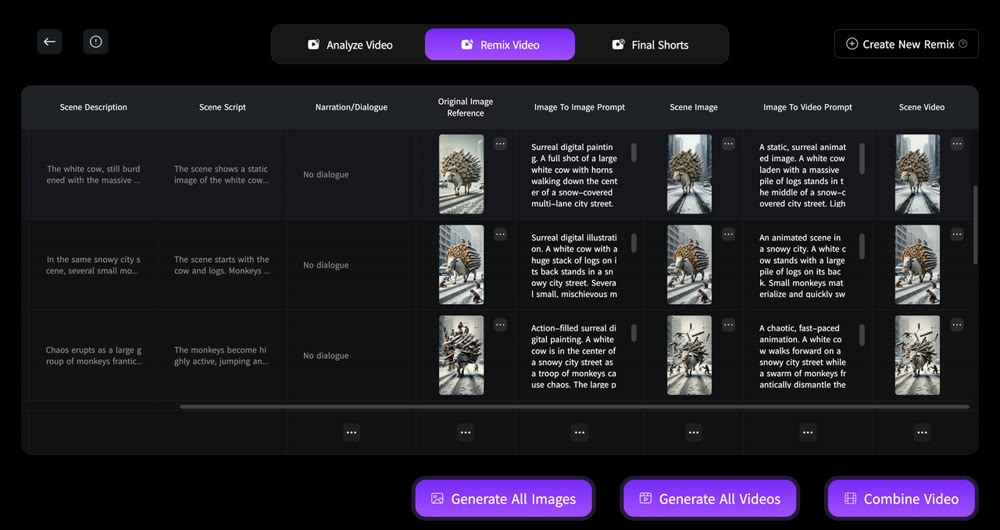
| Step | Core Value / Objective |
|---|---|
| Step 1: Input & Analysis | Structuring Data: Convert unstructured ideas or raw text into a structured script. (scenes, duration, visual descriptions). |
| Step 2: Remix Mode | Direction: Decide whether to keep the original structure or completely reimagine it. Originality: Ensure the new output has a distinct visual style to avoid "Reused Content" flags. |
| Step 3: Visual Synthesis | Visual Innovation: Use image-to-video to turn static concepts into fluid motion. Batching: Generate consistent character assets for multiple scenes instantly. |
| Step 4: Generation & Audit | Dynamic Flow: Ensure animations match the pacing of the voiceover. Cinematic Quality: Use text-to-video to generate complex scenes from scratch without needing stock footage. |
| Step 5: Final Polish | Delivery: Seamlessly stitch elements together. Add captions and export in HD. Prepare hashtags and descriptions for immediate deployment. |
3. Data-Driven Iteration
YouTube's algorithm rewards engagement. You must become fluent in YouTube Analytics (YTA).
- The Metric That Matters: Focus on "Viewed vs. Swiped Away." A "Viewed" rate above 70-75% is the benchmark for virality.
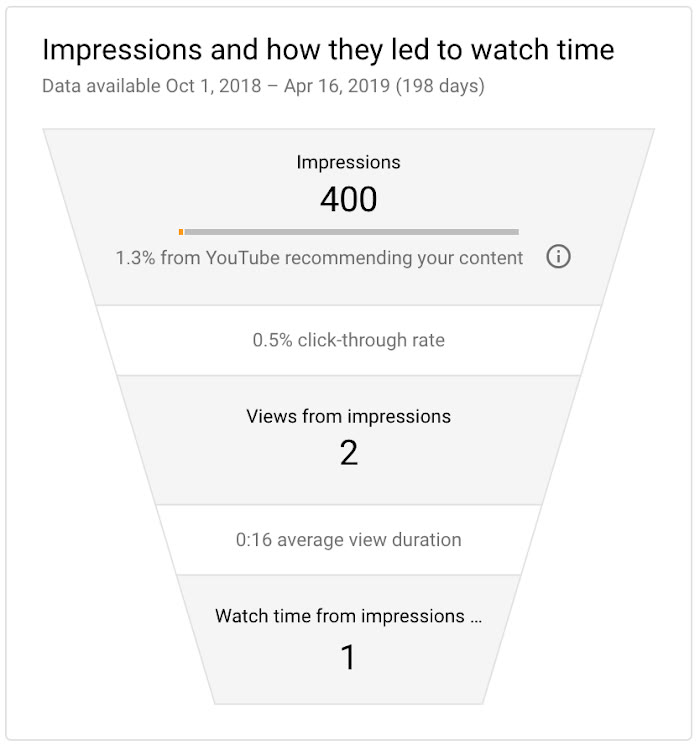
- The "10k View Plateau": New channels often face a testing period. If your metrics are strong (75%+ retention) but views are stuck, keep posting. The algorithm typically grants a "push" after 15–20 days of consistency.
- Troubleshooting: If you are stuck at low views (under 1k), audit your account for "shadowban" symptoms (IP issues) or, more likely, content quality issues.
III. Sprinting to YPP Eligibility
YPP status is your passport to ad revenue and long-term business operations.
1. The Thresholds (Official Requirements)
YouTube offers a two-tier system to support creators at different stages.
| Tier | Subscriber Requirement | Watch Requirement (Meet ONE) | Unlocked Features |
|---|---|---|---|
| Tier 1: Fan Funding | 500+ Subscribers | 3,000 Public Watch Hours (Yearly) OR 3 Million Shorts Views (90 Days) |
Fan Funding (Super Thanks, Memberships), Shopping features. |
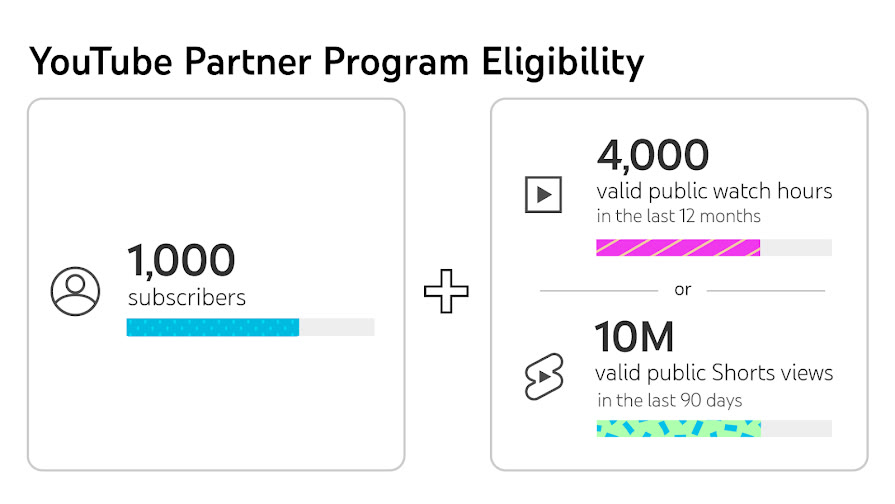
| Tier 2: Ad Revenue | 1,000+ Subscribers | 4,000 Public Watch Hours (Yearly) OR 10 Million Shorts Views (90 Days) |
Full Monetization (Ad Revenue Sharing, Premium Revenue). |
Warning: Never buy subscribers or views. This violates policies, ruins your audience retention data, and risks account termination.
2. Acceleration Tactics
- Leverage Live Streams: While Shorts views accumulate quickly, they don't count toward the "4,000 Watch Hours" for long-form eligibility. However, vertical Live Streams DO count toward watch hours, offering a strategic shortcut.
- Advanced Features: To apply, you must unlock "Advanced Features" in settings. This can be done instantly via Video Verification (showing your face) or automatically by building 2 months of consistent Channel History.
- The Appeal Process: If your first application is rejected (usually for "Reused Content"), you have 21–30 days to submit a video appeal. Crucial: Always save your project files (prompts, raw generation clips) to prove to YouTube that you created the content using AI tools.
3. Pre-Application Audit
Before clicking "Apply," clean up your house.
- Prune Low-Quality Content: Consider unlisting videos with poor performance or those that might border on copyright infringement.
- Data Lag: YPP eligibility data often lags by 5–7 days. Wait for the dashboard to fully update after you hit the 10M view mark.
IV. Monetization & Diversification
Qualifying for YPP is just the starting line.
1. AdSense & Tax Compliance
- AdSense Setup: You can link an AdSense account once you hit the Tier 1 threshold. To minimize risk, seasoned creators link max 2-3 channels per AdSense account.
- PIN Verification: Once you earn your first $10, Google will mail a physical PIN to your address for verification.
- Tax Info (W-8BEN): International creators must file US tax forms. Depending on your country's tax treaty with the US, you may be eligible for reduced withholding rates (often 0% on services, 10% on royalties) to avoid a flat 30% deduction.
2. Revenue Reality Check
- The Split: Shorts creators receive 45% of allocated ad revenue. Long-form creators receive 55%.
- RPM (Revenue Per Mille):
- Geography: Views from Tier 1 countries (US, UK, Australia) pay significantly higher RPMs than Tier 3 regions.
- Format: Long-form videos (8+ minutes) have much higher earning potential than Shorts. A channel might earn hundreds from Shorts but thousands from long-form with the same traffic volume.
3. Beyond Ads: Building a Moat
Smart creators diversify immediately.
- Affiliate Marketing: Place links in your pinned comments. While Instagram is big for this, YouTube Shorts is catching up. Commissions typically range from 1% to 15%.
- Brand Deals: You don't need YPP for this. Even small, niche AI channels can secure sponsorships from software companies or mobile apps.
- Asset Flipping: A clean, monetized YPP channel is a digital asset. In the current market, a Tier 2 monetized channel can sell for approximately $250–$300, providing an exit strategy or immediate cash flow.
Start Your Engine
The opportunity is massive, but the window for "easy" entry is narrowing. Treat your channel like a startup: iterate on data, respect the platform, and use the best tools available.
Ready to produce high-end visuals that stand out?
Use Genmi AI to transform your static ideas into viral videos, or explore our text-to-video engine to generate cinematic scenes from simple prompts. The tools are ready—the rest is up to you.
Recommended Articles
The Two Viral Strategies for Using AI to Make Shorts on YouTube (Format vs. Script)
Uncover the two dominant strategies for viral AI Shorts: "Format-Driven Virality" and "Script-Driven Virality." Learn how they differ in any aspects.

Top 10 Best AI Video Generators in 2025: A Real Test Review
Our 2025 guide reviews top AI video platforms on quality, features, and price to help you find the best AI video generator for your needs.
An In-Depth Veo 3 Review: The AI Video Tool Redefining Creativity
Explore our comprehensive Veo 3 review. Discover its advanced features, cinematic capabilities, and how it compares to other AI video tools for professionals.