


Mastering AI Image Prompts: Your Definitive Guide to Crafting Stunning Visuals
Article Summary:This guide explores crafting effective AI image prompts, emphasizing key components like subject, style, and lighting to transform ideas into stunning visuals, empowering users to become active creators in digital art.
In the rapidly evolving landscape of digital creativity, the ability to translate a thought into a compelling visual has become more accessible than ever. At the heart of this revolution are AI image creation platforms, which can turn simple text descriptions into intricate works of art. However, many users find their initial results are often generic or not quite what they envisioned. The secret to bridging the gap between your imagination and the final image lies not in the complexity of the AI, but in the quality of your instructions: the AI image prompts.
Think of yourself as an art director and the AI as your incredibly talented, literal-minded artist. It can paint anything, but it needs a clear, detailed, and evocative brief. This guide is designed to transform you into an expert director. We'll deconstruct the anatomy of a perfect prompt, explore advanced techniques, and empower you to craft stunning, unique visuals that truly represent your vision.
What Are AI Image Prompts? The Foundation of Creation
At its core, an AI image prompt is a set of text instructions that you provide to an AI model to describe the visual you want it to produce. But a truly effective prompt is far more than a simple command. It is a rich tapestry of descriptive language that guides the AI on every aspect of the image, from the subject and style to the lighting and mood. Mastering the art of the prompt is the single most important skill for anyone looking to harness the creative power of AI.
The Anatomy of a Perfect Prompt: Key Components
A well-structured prompt typically includes several key components. While you don't always need to use every single one, understanding them will give you precise control over the outcome.
1. Subject:
This is the "what" of your image. Be specific. Instead of a dog, try "a fluffy, joyful golden retriever puppy." The more detail you provide about the subject, the clearer the AI's interpretation will be.
2. Medium & Style:
This defines the artistic appearance. Do you want a photograph, a painting, or a sketch?
* Examples: oil painting, watercolor, photorealistic, 3D render, anime style, Art Deco, cyberpunk, Studio Ghibli inspired.
3. Environment & Setting:
Where is your subject located? The background is crucial for context and storytelling.
* Examples: in a bustling futuristic city, on a serene misty mountain top, inside a cozy, book-lined library, floating in deep space.
4. Lighting & Atmosphere:
Lighting dictates the mood and emotional tone of the visual.
* Examples: soft morning light, dramatic cinematic lighting, golden hour, neon glow, dark and moody, ethereal glow.
5. Composition & Angle
This is about how the scene is framed, similar to cinematography.
* Examples: close-up shot, wide-angle landscape, portrait, from a low angle, bird's-eye view, Dutch angle.
6. Detail & Nuance:
These are the small, specific details that add a layer of uniqueness and realism.
* Examples: hyperdetailed, intricate patterns, wearing a tiny silver crown, 8K resolution, sharp focus.
From Basic to Advanced: An Example in Practice
Let's see how these components can elevate a simple idea.
- Basic Prompt:
a castle
This will likely produce a generic, uninspired castle.
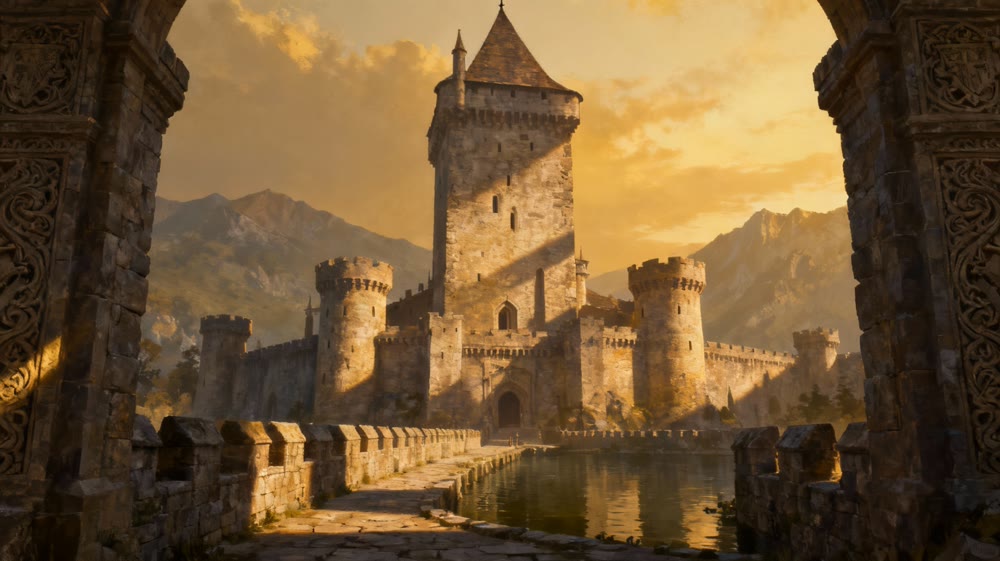
- Improved Prompt:
A majestic fantasy castle on a mountaintop, oil painting.
Better. Now we have a subject, a setting, and a style.
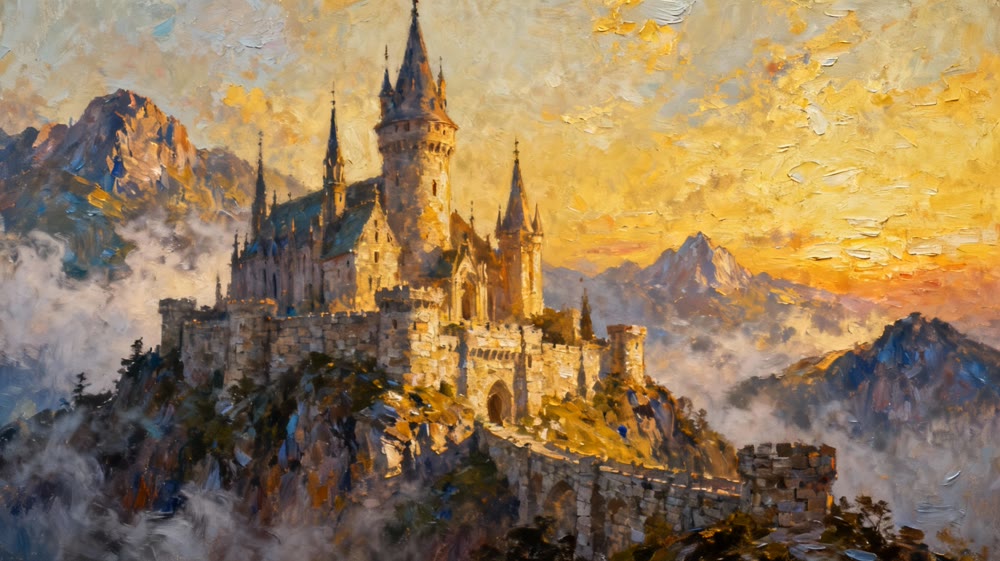
- Advanced Prompt:
Epic fantasy castle perched on a sheer cliff, overlooking a misty valley at sunrise, dramatic golden hour lighting, intricate gothic architecture, hyperdetailed, wide-angle landscape, in the style of Albert Bierstadt.
This prompt provides rich detail across all key components, giving the AI a clear and powerful brief to work from.
Putting Theory into Practice with Modern Tools
Understanding these principles is the first step; applying them is where the magic happens. The quality of the final image is heavily influenced by the sophistication of the AI model you use. Whether you're a seasoned artist or a curious beginner, a great way to start is to make images with AI on a user-friendly platform that can interpret nuanced instructions.
Platforms like Genmi AI are designed to be highly responsive to detailed and creative prompts. When you craft a prompt with specific styles, lighting cues, and compositional elements, the powerful models behind Genmi AI can interpret those details with remarkable accuracy. The key is to experiment. Don't be afraid to combine styles, try unusual camera angles, or add quirky details. The iterative process of writing a prompt, seeing the result, and then refining your prompt is the best way to develop your skills.
The Power of Negative Prompts
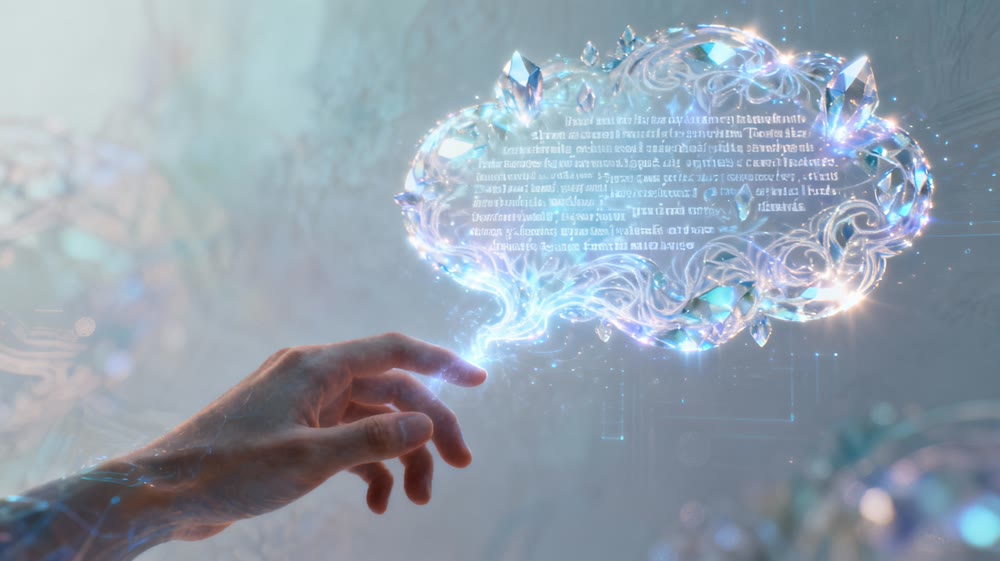
Sometimes, telling the AI what not to include is just as important as telling it what to include. This is where negative prompts come in. A negative prompt is a list of terms you want the AI to avoid. This is incredibly useful for refining your creations and removing common artifacts.
Common Negative Prompts:
--no blurry, deformed, bad anatomy, extra limbs, poorly drawn hands--no ugly, watermark, signature, text
By adding these exclusions, you "clean up" the final piece, ensuring it aligns more closely with professional standards.
Conclusion
Crafting effective AI image prompts is a skill that blends creativity with precision. It's about learning a new language—a language of visual description. By breaking down your ideas into their core components—subject, style, setting, lighting, and composition—you move from a passive user to an active creator. You become the director of your own visual masterpieces.
The journey to mastering prompts is one of exploration and refinement. So take these principles, fire up your favorite AI art platform, and start experimenting. The only limit is your imagination.
Recommended Articles
Sora 2 vs. Veo 3: An Expert Analysis of AI Video Showdown
An expert comparison of OpenAI's Sora 2 and Google's Veo 3. We analyze clip length, audio, quality, and control to help you choose the right AI video tool.
Starry AI Review: A Deep Dive into Artistic Customization & Style Diversity
We tested Starry AI to evaluate its 1000+ art styles. Read our professional review on its creative capabilities, photorealism limits, and best use cases.
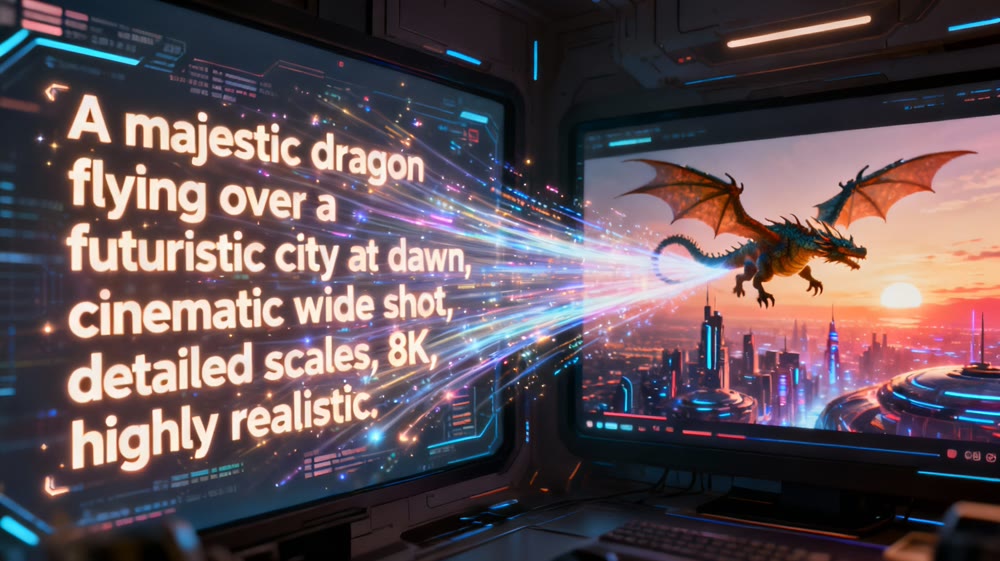
AI Video Making: A Practical Guide to Creating Your First Moving Scene
Unlock the power of AI video making. This guide walks you through the steps to create stunning moving scenes from text, even if you're a complete beginner.