


OpenAI Sora: A Deep Dive into the AI Video Generator's Capabilities, Limitations, and Future
Article Summary:
This article serves as a comprehensive, step-by-step guide for beginners eager to create their first AI-generated image. It demystifies the process of text-to-image generation, focusing on the crucial art of prompt engineering.
The world of artificial intelligence has taken another monumental leap forward with OpenAI's introduction of Sora, a text-to-video model poised to revolutionize digital content creation. This powerful AI tool can interpret simple text prompts and transform them into high-fidelity, imaginative video clips up to one minute in length.
As the creative and tech communities explore Sora's current abilities, speculation is already mounting for its successor, potentially named Sora 2. This article offers a detailed analysis of the first-generation Sora, exploring its core technology, its remarkable strengths, its current shortcomings, and the transformative potential we can anticipate by 2025.
On This Page
- What Exactly is OpenAI Sora?
- The Technology Behind Sora: How Does It Work?
- Sora's Core Strengths and Capabilities
- Current Weaknesses and Developmental Hurdles
- The Road to Sora 2: What Can We Expect?
- Transformative Use Cases for Sora and Its Successors
- The Ripple Effect Across Creative Industries
- Navigating the Ethical Maze and Safety Measures
- Final Thoughts
What Exactly is OpenAI Sora?
Sora is the latest breakthrough in generative AI from OpenAI, engineered to create video content directly from textual descriptions. Moving far beyond the short, often incoherent clips of earlier models, Sora can produce fluid, high-definition videos for up to 60 seconds. It excels at generating complex scenes featuring multiple characters, specific motion sequences, and intricate details in both the subject and its environment. Critically, Sora demonstrates a foundational understanding of how objects and beings exist and interact within the physical world.
The Technology Behind Sora: How Does It Work?
At its core, Sora operates as a diffusion model. This process begins with a frame of visual static (like television "snow") and methodically refines it over numerous steps, removing the noise to reveal a clear video that aligns with the user's text prompt. This is conceptually similar to how AI image generators like DALL-E function.
The true innovation lies in Sora's transformer architecture, the same technology that powers advanced language models like GPT. This gives Sora a profound grasp of language, allowing it to accurately deconstruct complex prompts. Furthermore, Sora views videos as a collection of data "patches," a method that enables it to learn from a vast and varied dataset of videos with different resolutions, durations, and aspect ratios, making it incredibly versatile.
Sora's Core Strengths and Capabilities
Extended Coherence: The ability to generate videos up to a minute long while maintaining narrative and visual consistency is a major advancement in the field.
Rich Scene Construction: Sora can craft detailed worlds with multiple interacting characters, dynamic backgrounds, and precise actions dictated by the prompt.
A Nascent Grasp of Physics: The model exhibits an early ability to simulate physical world interactions, making character movements and environmental effects appear more believable.
Bringing Images to Life: Sora is not limited to text; it can take a static image and animate it, introducing motion and depth.
AI-Powered Video Editing: It can also modify existing videos based on text commands, enabling users to alter the style, setting, or mood of a clip.
Check the YouTube Video Example here.
Current Weaknesses and Developmental Hurdles
Despite its groundbreaking nature, Sora is still a work in progress. OpenAI has been transparent about its current limitations:
Inconsistent Physics Simulation: The model can struggle with the complex physics of certain interactions, like the way glass shatters or how liquids behave.
Flawed Cause-and-Effect Logic: Sora sometimes fails to connect an action with its logical outcome. For instance, a character might bite a sandwich, but the sandwich remains whole.
Spatial and Temporal Confusion: The model can get confused with spatial directions (like left and right) and may struggle to accurately represent a sequence of events over a specific timeline.
The Road to Sora 2: What Can We Expect?
Looking toward 2025, a more advanced Sora 2 could overcome these challenges and introduce powerful new features:
Advanced Physical Realism: Expect a more robust understanding of physics, resulting in highly realistic simulations of object interactions and environmental dynamics.
Longer, More Stable Videos: A primary goal will be to extend video generation beyond the one-minute mark, maintaining flawless coherence over several minutes.
Fine-Grained User Control: Future versions will likely offer users precise control over elements like camera angles, character facial expressions, and specific object placements.
Integrated Soundscapes: A major evolution would be the inclusion of text-to-audio capabilities, allowing Sora 2 to generate videos complete with synchronized sound effects, ambient audio, and even AI-generated dialogue.
Near Real-Time Generation: While ambitious, the potential for real-time video generation could unlock revolutionary applications in live events, gaming, and interactive storytelling.
Transformative Use Cases for Sora and Its Successors
The practical applications for a mature text-to-video AI are nearly limitless.
For Marketers & Content Professionals
Accelerated Prototyping: Instantly create animated storyboards and concept videos for ad campaigns, films, and social media.
Hyper-Personalized Advertising: Generate bespoke video ads on the fly, tailored to the specific interests and data of individual viewers.
Scalable Social Media Production: Effortlessly produce a high volume of unique, engaging video content for platforms like TikTok, YouTube, and Instagram.
In Education & Corporate Training
Dynamic Learning Materials: Develop immersive educational content, such as historical reenactments, scientific visualizations, and virtual tours.
Customized Training Simulations: Create safe, virtual environments for training employees on complex machinery or emergency procedures.
For Media & Entertainment
Democratizing Filmmaking: Provide independent creators and small studios with access to blockbuster-level visual effects and animation tools.
Next-Generation Gaming: Automate the creation of in-game cutscenes, character animations, and procedurally generated environments.
The Ripple Effect Across Creative Industries
The arrival of Sora and its future iterations is set to be a disruptive force. Industries like stock photography and videography may face a paradigm shift as users can generate custom visuals instead of searching for existing ones. Roles within animation and VFX will likely evolve, integrating AI as a fundamental part of the creative workflow.
However, this disruption also signals a massive opportunity. For creative professionals, Sora can act as a powerful co-pilot, automating time-consuming tasks and freeing them to concentrate on high-level strategy, storytelling, and artistic direction.
Navigating the Ethical Maze and Safety Measures
OpenAI acknowledges the significant potential for misuse, from generating misinformation to creating harmful content. To mitigate these risks, they are implementing crucial safety protocols before a wide release:
Collaborating with Red Teams: Domain experts are actively stress-testing the model to find and patch vulnerabilities related to bias, hate speech, and disinformation.
Building Detection Classifiers: OpenAI is developing technology to help identify AI-generated content, creating a classifier that can tell if a video was produced by Sora.
Enforcing Strict Usage Policies: When released, Sora will be governed by policies that forbid the creation of violent, hateful, or adult content, as well as the unauthorized use of celebrity likenesses or copyrighted IP.
Final Thoughts
OpenAI's Sora is more than just a new tool; it represents a new medium for visual storytelling. While the current version is a stunning proof-of-concept with clear limitations, the path to Sora 2 promises a future where our ability to visualize ideas is limited only by our imagination. As anticipation for the next iteration grows, many creators are keen to learn more about how they might obtain a sora 2 invite code to be at the forefront of this technology.
This technology heralds a new era of collaboration between human creativity and artificial intelligence. As we stand on the cusp of this revolution, a steadfast commitment to ethical development and responsible deployment will be essential to ensuring that this powerful technology empowers and benefits all of humanity. The future of video is here, and it starts with a simple line of text.
Recommended Articles
Freepik AI Image Generator: A Designer's Honest Review
A hands-on review of the Freepik AI Image Generator. We test its models, editing tools, and mockup feature to see if it's right for a pro design workflow.
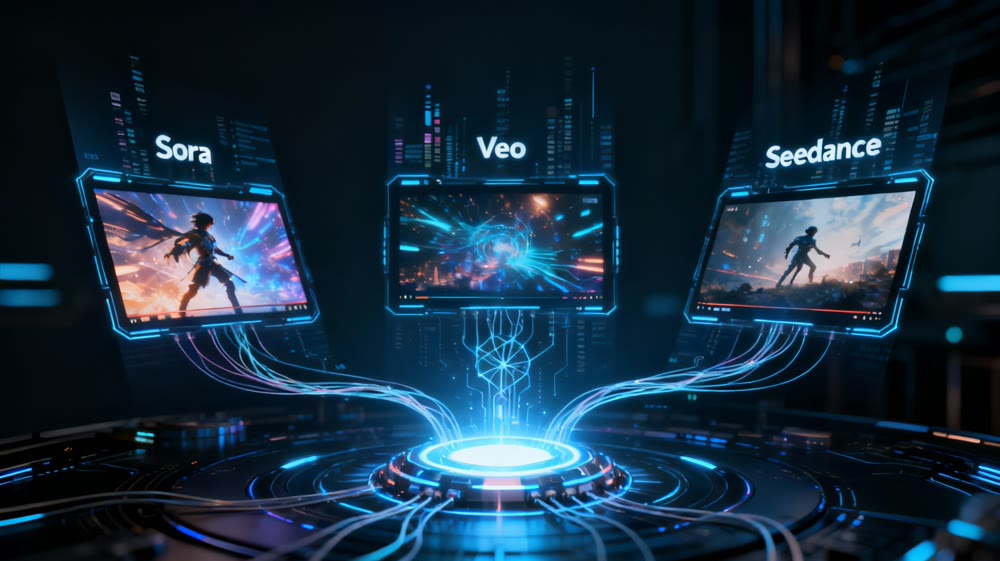
Sora 2 vs Veo 3 vs Seedance 1.0 Pro: Top AI Video Models Showdown
An in-depth analysis of Sora 2 vs Veo 3 vs SeeDance 1.0 Pro. We compare video quality, realism, and control to determine which AI model leads the new era.
From Prompt to Masterpiece: A Beginner's Guide to Your First AI Image
New to AI art? Learn how to craft the perfect prompt and generate stunning images from text. Our guide makes it easy for beginners to start creating today.