


Cracking the Code: The 4 Core Factors Driving YouTube Shorts Discovery
Article Summary: This article breaks down the four critical factors that determine YouTube Shorts' visibility: viewer personalization, video performance metrics, external trends, and metadata optimization. Learn how to leverage these insights to increase your views and engagement on the platform.

The YouTube Shorts discovery mechanism—often just called "the algorithm"—is a sophisticated system with one primary mission: to match every viewer with content they are most likely to watch and enjoy. The ultimate goal is to boost user session time and repeat visits to the platform.
It's a common misconception that YouTube’s search and discovery system favors certain content types or formats. In reality, it doesn't. Instead, it ranks and recommends content based on its performance and its personalized relevance to each individual viewer.
Based on official YouTube guidance and industry analysis, the factors that influence whether your Shorts get discovered and recommended can be broken down into four key categories.
I. Viewer Personalization
The system learns from a user's past behavior to decide what to recommend next. This is the fundamental principle that allows Shorts to be accurately delivered to new, receptive audiences.
- Viewing History and Interactions: The system considers which Shorts or channels a viewer has liked and watched in the past to push content they are most likely to enjoy.
- Topics and Interests: By identifying the themes or content genres a viewer engages with, the system can recommend similar Shorts.
- Engagement with Trends: The system takes note of trends a viewer has participated in, such as using popular songs or sampled audio, and recommends other Shorts tapping into the same trend.
II. Video Performance & Engagement
This is the critical internal factor for measuring a Short's success. The system closely monitors how viewers react when a video is recommended to them.
- 📌 View-Through Rate (% of Viewers Who Chose to View): When your Short appears in the Shorts feed, do viewers watch it, swipe past it, or click "Not interested"? For a Short to go viral and hit millions of views, this rate often needs to exceed 80%.
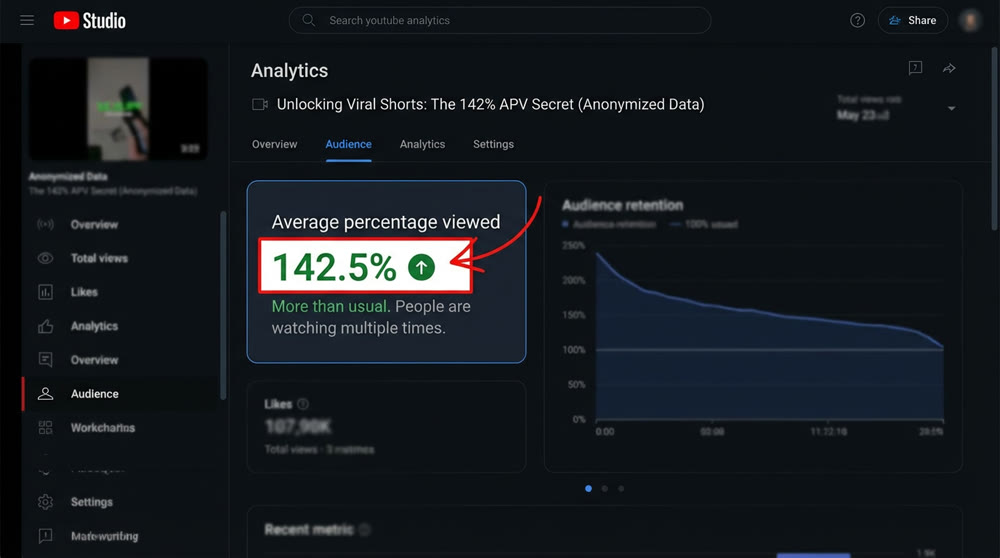
- 💡 Average View Duration (AVD) and Average Percentage Viewed (APV): The system tracks whether viewers "stick around." This metric is paramount for Shorts.
- Creators must strive to hold audience attention throughout the entire video. Creating visually captivating scenes from start to finish is crucial, and tools that can rapidly generate unique visuals, like Genmi AI's text-to-video generator, can be a game-changer here.
- Successful Shorts have exceptionally high retention. For example, a high-performing 15-second Short often achieves an Average View Duration of over 21 seconds, translating to an APV of more than 140%.
Other Engagement Signals: The system also weighs whether viewers express their enjoyment through likes/dislikes and their responses to post-watch surveys.
Shorts Performance: Viral vs. Average
To illustrate the stark differences in how YouTube's algorithm perceives and promotes content, this table compares key performance metrics between a typical "Average Short" and a highly successful "Viral Short." Understanding these benchmarks is crucial for optimizing your content for discovery.
| Metric | Viral Short (Example) | Average Short (Example) | Why It Matters |
|---|---|---|---|
| View-Through Rate (VTR) | > 80% Extremely high retention Hook grabs attention immediately Viewers rarely scroll away Content retains viewers throughout Algorithm notices strong engagement Promotes the Short more aggressively Key for virality |
50-60% Moderate retention Hook may be weak Viewers drop off early Some finish, many leave midway Algorithm sees moderate engagement Less likely to boost Limited organic reach |
Shows if the initial hook is strong enough to stop the scroll. High VTR increases visibility. Low VTR signals disengagement. Critical for early momentum Directly impacts recommendation algorithm Predicts long-term video performance |
| Avg. Percentage Viewed (APV) | > 120% Many viewers re-watch Content holds attention until the end Viewers engage with multiple sections Strong engagement signal Encourages higher algorithm boost Indicates repeat value Key metric for retention |
70-90% Viewers drop off early Content retains moderate attention Some re-watches occur Engagement signals are weaker Algorithm may not boost as much Lower long-term reach Content may plateau quickly |
Indicates if content can hold attention until the end and beyond. Re-watches signal strong engagement. Boosts algorithm recommendation Essential for virality Helps measure content stickiness Influences overall channel growth |
| Likes per 100 Views | 5-10 Strong audience engagement High positive feedback Viewers appreciate content Signals enjoyment to algorithm Encourages promotion High social proof Indicates community approval |
1-3 Low engagement Few positive reactions Weak audience signal Limited enjoyment indication Minimal promotion by algorithm Lower social proof Less feedback loop |
Strong signal of audience enjoyment Sent to the system. More likes improve content ranking Fewer likes limit reach Influences discoverability Helps algorithm understand audience preference Encourages further promotion |
| Shares | High Many viewers share content Organic amplification Content spreads beyond initial viewers Signals high quality Encourages virality Boosts reach and discovery Positive feedback loop for channel growth |
Low Few viewers share Limited organic reach Minimal amplification Content mostly viewed only by initial audience Algorithm sees less social validation Low promotion potential Channel growth limited |
Measures if content is compelling enough for viewers to endorse. High shares indicate viral potential Low shares limit reach Critical for network effect Amplifies organic visibility Directly affects potential virality Signals audience enthusiasm |
III. External Factors & Topic Interest
These are elements beyond a creator's direct control, but they directly impact the potential audience size and explain where viewer traffic originates.
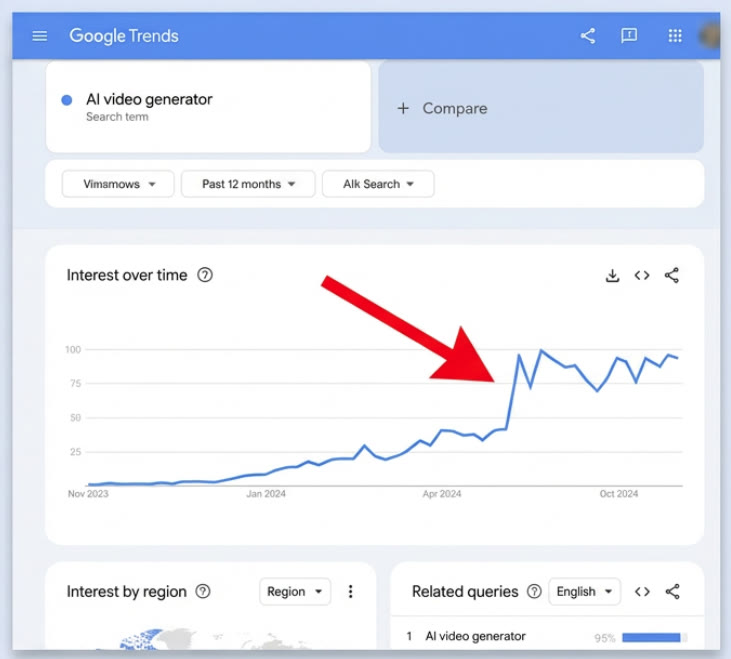
- Topic Interest: This refers to the total number of people worldwide interested in the topic covered by your Short. Some topics naturally have a broader appeal than others, and their popularity can change over time. You can use tools like Google Trends to identify explosive and growing topics.
- Competition: The YouTube system ranks your content against videos from all other channels a viewer might watch. Even if your Short has strong performance metrics, its impression count may decrease if a large number of competing Shorts from other channels are performing even better.
- Seasonality: YouTube's traffic patterns fluctuate throughout the year. For instance, viewership can change significantly during major holidays or specific seasons.
IV. Discoverability & Metadata
Shorts aren't just discovered in the Shorts feed; the platform recommends them through various other channels.
- Search Integration: Shorts are prominently featured in YouTube's search results.
- Metadata Alignment: How well your video's title, description, and tags (its metadata) align with what viewers are searching for and are interested in will directly impact its search ranking. Accurate and compelling thumbnails, titles, and descriptions not only help the system recommend your content but also entice viewers to click. For a deeper dive, check out our guide on YouTube publishing and SEO.
- Trending Sounds & Hashtags: By staying on top of trends and using popular audio from the library, you increase the chances of your Shorts being featured on that sound's dedicated page.
✨ Core Takeaway: The opportunities for your Shorts to gain exposure are diverse, spanning the Shorts Tab (based on performance and relevance), the Home Tab (prime viewing real estate), the Subscriptions Tab (for your latest uploads), and YouTube search results. A winning Shorts strategy involves holistically optimizing both video performance (retention, view-through rate) and metadata (titles, tags) while actively participating in community trends.
Ready to Create Shorts That Get Discovered?
Understanding these four factors is the first step. The next is implementation—consistently creating high-performance content that captivates viewers from the first second.
This is where AI-powered creation becomes your unfair advantage. Genmi AI is an intuitive platform designed to help you effortlessly produce high-quality, engaging Shorts that command attention and drive up watch time. From generating unique visual concepts to streamlining your entire creative workflow, Genmi AI empowers you to turn these strategic insights into tangible views.
Stop just making Shorts. Start making Shorts that work. Explore Genmi AI today and unlock your channel's potential.
Recommended Articles

From Shorts to Features: Two Proven Playbooks for Creating Long-Form AI Videos on YouTube
Learn two proven playbooks for creating long-form AI videos on YouTube. Master content compilation and cinematic narratives to boost RPM and channel growth.

Top 10 Best AI Video Generators in 2025: A Real Test Review
Our 2025 guide reviews top AI video platforms on quality, features, and price to help you find the best AI video generator for your needs.

Genmi AI Guide: Create Engaging and Professional AI Visuals in Seconds
Unlock your creative potential. This comprehensive guide shows you how to use Genmi AI's powerful tools for text-to-image, image-to-video, and more.