


Find the Best AI 3D Model Generator of 2025: A Complete Guide
Article Summary: This guide explores the best AI 3D model generators, comparing features and tools to help creators overcome traditional barriers and bring complex concepts to life faster and more efficiently than ever before.
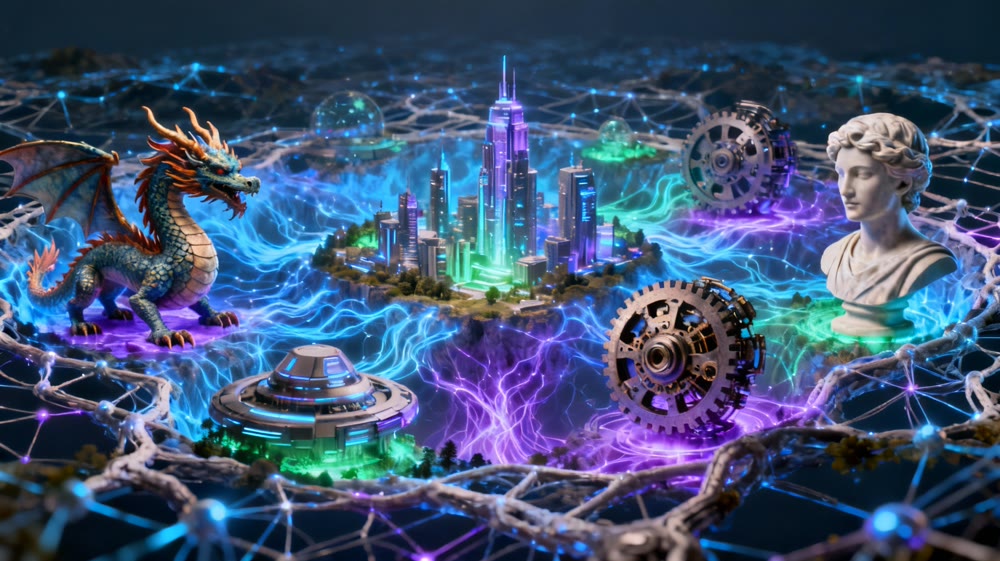
Struggling to bring complex 3D concepts from imagination to reality? The traditional process of 3D modeling can be time-consuming and require specialized skills, creating a barrier for many aspiring creators. What if you could turn simple text prompts or 2D images into detailed, three-dimensional assets in a matter of minutes?
This is no longer science fiction; it's the new reality powered by artificial intelligence. This guide is designed to help you navigate this exciting landscape and find the best ai 3d model generator for your specific needs. We will explore the leading platforms, evaluate their key features, and provide the insights you need to accelerate your creative workflow and bring your ideas to life with unprecedented ease.
What Are AI 3D Modeling Tools and Why Do They Matter?
At their core, AI 3D Modeling Tools are sophisticated software platforms that use machine learning algorithms to produce three-dimensional models from various inputs, such as text descriptions (text-to-3D), 2D images (image-to-3D), or even video footage. By analyzing vast datasets of 3D shapes and their corresponding descriptions, these tools can interpret a user's request and construct a digital object that matches it.
The primary benefit is a massive leap in efficiency and accessibility. Tasks that once took hours or days of manual work can now be accomplished in minutes. This shift democratizes 3D creation, empowering game developers, product designers, architects, and hobbyists to rapidly prototype and visualize their concepts without a steep learning curve.
Criteria for Choosing the Right 3D AI Tool
Not all AI tools are created equal. To select the right one for your projects, consider the following key factors:
Quality and Detail of Output
The primary measure of any 3D creation tool is the quality of its output. Look for platforms that produce clean topology, high-resolution textures, and intricate details. Some tools excel at organic shapes, while others are better suited for hard-surface or geometric models.
Ease of Use and Learning Curve
A great tool should have an intuitive interface that simplifies the creation process. Whether you are a seasoned professional or a complete beginner, the platform should feel accessible. The goal is to spend less time fighting with software and more time refining your creative vision.
Supported Formats and Integrations
Compatibility is crucial. The ideal tool should export models in standard formats like .OBJ, .FBX, or .GLB to ensure they can be used in other software such as Blender, Unity, or Unreal Engine. For those interested in physical fabrication, finding the best ai 3d model generator for 3d printing means prioritizing tools that produce watertight, printable meshes.
Pricing and Accessibility
The market offers a range of options, from enterprise-level solutions to completely free platforms. When evaluating cost, consider the value you receive in terms of features, usage limits, and commercial rights. Many users start by exploring the best free ai 3d model generator to test capabilities before committing to a paid plan.
With Krea AI's real-time generation, you can turn simple sketches into high-quality renders instantly, speeding up your concept phase.
Top AI 3D Model Creators to Watch in 2025
The field of AI-driven 3D creation is evolving rapidly. Here are some of the standout platforms that are defining the industry today.
1. Luma AI
Luma AI has gained significant attention for its high-quality output and impressive NeRF (Neural Radiance Fields) technology. This innovative approach allows creators to generate stunning 3D scenes directly from video footage, making it an excellent choice for those focused on realism and capturing real-world environments.
User Experience: The interface is intuitive, allowing users to easily upload videos and generate 3D models with minimal effort. Users have reported that the rendering process is relatively quick, and the quality of the generated models is exceptional.
Output Quality: Luma AI excels in creating highly detailed and realistic 3D representations, making it suitable for both professional and creative projects.
Pricing: Luma AI operates on a subscription model, with pricing tiers that cater to different user needs, starting from a free trial to premium plans that unlock advanced features.
2. Spline
Spline effectively bridges the gap between 2D design and 3D modeling by offering a collaborative, web-based tool that feels familiar to users of traditional design software. It excels in producing 3D assets for websites and interactive experiences, making it a favorite among UI/UX and web designers.
User Experience: The user-friendly interface allows designers to create and manipulate 3D objects seamlessly. The collaborative features enable real-time teamwork, which is a significant advantage for design teams.
Output Quality: Spline produces visually appealing 3D models that integrate well into web environments, providing a smooth user experience.
Pricing: Spline offers a free version with basic features, while its pro version is affordably priced, making it accessible for freelancers and small tMeMeshy**
3. Meshy
Meshy is a versatile suite of tools that offers text-to-3D, image-to-3D, and AI texturing capabilities. Its focus on speed and a comprehensive feature set makes it a strong contender for the best AI 3D model generator, especially for game developers and concept artists who need to produce assets quickly.
User Experience: Users appreciate the straightforward workflow, which allows for rapid asset generation. The platform's flexibility in handling various input types (text, images) enhances its usability.
Output Quality: The generated models are of high quality, with realistic textures and details that are particularly beneficial for game development and concept art.
Pricing: Meshy follows a pay-per-use model, which can be economical for users who need to generate assets on an as-needed basis. Subscription options are also available for those who require regular access to its features.
A Closer Look at Genmi AI: The Future of Creative Asset Production
While many platforms specialize in a single function, some are pushing the boundaries of what's possible by building comprehensive creative ecosystems. Genmi AI is a standout example, positioning itself as a powerful suite for the next generation of digital content. Its approach focuses on unifying different forms of media creation under a single, intelligent platform.
Genmi AI is engineered to understand nuanced creative prompts, allowing users to build intricate 3D models with remarkable speed and precision. Beyond just static models, the platform's vision extends to dynamic content, as demonstrated by its development of advanced AI models for other media types. This holistic approach suggests a future where artists and designers can move seamlessly between 3D, video, and image creation within one intuitive environment, fundamentally changing how we approach digital asset creation.
The Impact of AI on 3D Modeling Workflows
The rise of ai 3d modeling is more than just a technological trend; it's a paradigm shift. It empowers solo creators and small teams to achieve results that were once only possible for large studios. This technology accelerates brainstorming, simplifies prototyping, and opens up new creative avenues. As we look towards the best ai 3d model generator 2025, the platforms that offer the highest quality, seamless integration, and the most intuitive user experience will undoubtedly lead the market.
Conclusion
The journey into AI-powered 3D creation is an exciting one. We've moved from an era of manual, labor-intensive modeling to one of rapid, intuitive, and accessible design. By understanding your specific needs—whether for 3D printing, game development, or web design—you can select a tool that not only saves you time but also unlocks new levels of creativity.
Platforms that empower this new wave of creators offer a glimpse into the future of AI-driven creativity. As you begin exploring these powerful tools, you are not just adopting new software; you are stepping into the future of digital artistry, a future where your imagination is the only true limit.
Recommended Articles
Vidu Q2 In-Depth Review: A Strategist’s Take on Turbo and Pro Video Modes
A hands-on review of Vidu Q2's Turbo and Pro modes from a digital strategist's perspective. See if its performance is ready for professional workflows.
Starry AI Review: A Deep Dive into Artistic Customization & Style Diversity
We tested Starry AI to evaluate its 1000+ art styles. Read our professional review on its creative capabilities, photorealism limits, and best use cases.
Mastering Prompt Engineering: A Blueprint for Automated AI Video Creation
Learn to build a systematic prompt engineering workflow for AI video. Deconstruct viral videos, automate content, and scale your AI video production efficiently